Understanding Hydroponic Nutrients: A Complete Guide
In hydroponic gardening, nutrients are the lifeblood of your plants. Unlike soil-based gardening, hydroponics relies entirely on you to provide the right balance of nutrients.
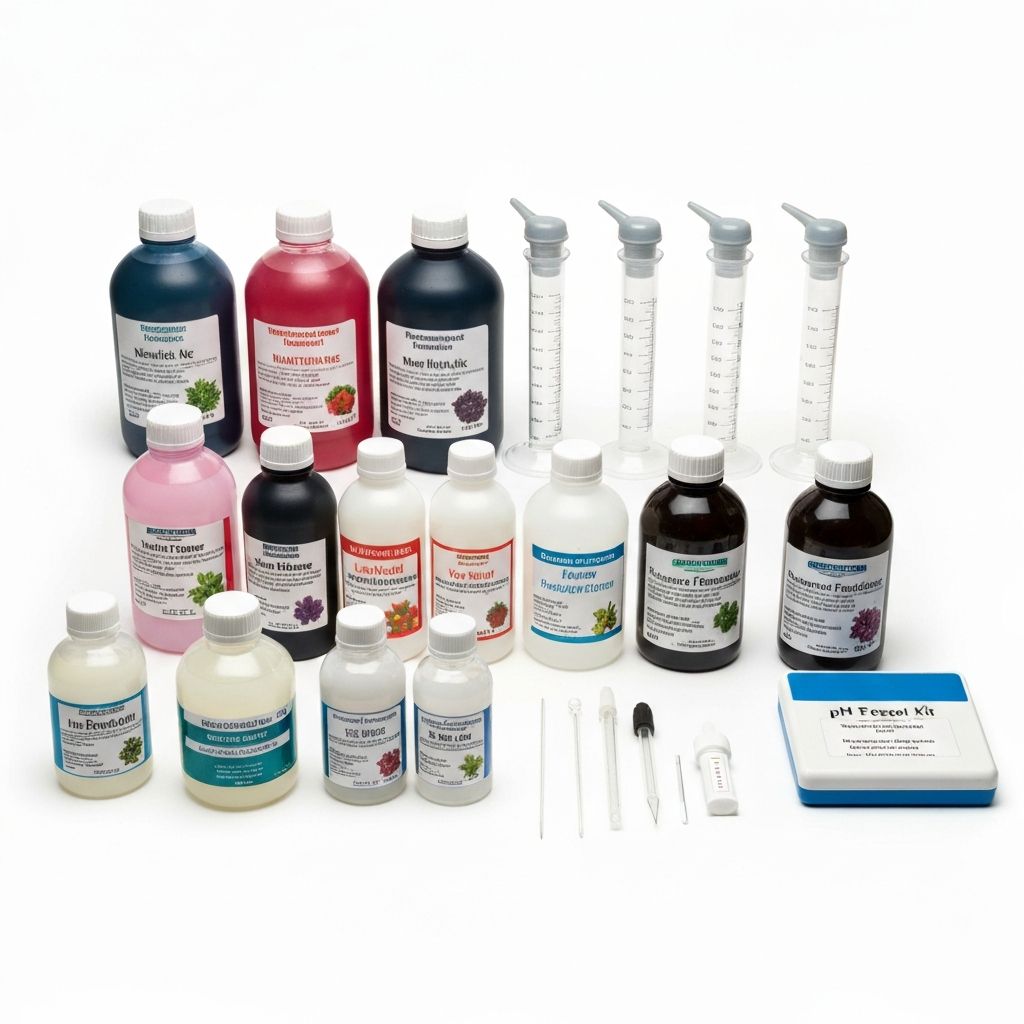
In hydroponic gardening, nutrients are the lifeblood of your plants. Unlike soil-based gardening, where plants can draw nutrients from the earth, hydroponics relies entirely on you to provide the right balance of nutrients for optimal growth. Whether you're growing herbs, vegetables, or fruiting plants, understanding hydroponic nutrients is key to achieving success. Here's a guide to help you get started.
The Essential Nutrients
Plants need 17 essential elements to grow. Three come from air and water (carbon, hydrogen, oxygen), while the rest come from your nutrient solution:
Macronutrients (needed in larger amounts) - **Nitrogen (N):** Leaf and stem growth - **Phosphorus (P):** Root development and flowering - **Potassium (K):** Overall plant health and disease resistance - **Calcium (Ca):** Cell wall structure - **Magnesium (Mg):** Chlorophyll production - **Sulfur (S):** Protein synthesis
Micronutrients (needed in smaller amounts) - Iron, Manganese, Zinc, Copper, Boron, Molybdenum, Chlorine
Types of Hydroponic Nutrients
Liquid Concentrates - Easy to measure and mix - Typically come in 2 or 3-part formulas - Good for beginners
Dry/Powdered Nutrients - More economical for large systems - Longer shelf life - Requires more precise measuring
One-Part vs. Multi-Part Formulas - **One-part:** Simplest to use, good for beginners - **Two-part:** Better for different growth stages - **Three-part:** Maximum control and customization
Mixing Your Nutrient Solution
- Start with good water:: RO or filtered water is ideal
- Add nutrients to water: (never the reverse)
- Follow manufacturer ratios: exactly
- Mix thoroughly: before testing
- Check and adjust pH: to 5.5-6.5
Understanding EC and PPM
EC (Electrical Conductivity) and PPM (Parts Per Million) measure nutrient concentration:
- - **Seedlings:** 0.5-1.0 EC / 250-500 PPM
- - **Vegetative growth:** 1.0-2.0 EC / 500-1000 PPM
- - **Flowering/Fruiting:** 1.5-2.5 EC / 750-1250 PPM
Common Nutrient Deficiencies
- - **Yellow leaves:** Nitrogen deficiency
- - **Purple stems:** Phosphorus deficiency
- - **Brown leaf edges:** Potassium deficiency
- - **Pale new growth:** Iron deficiency
Tips for Success
- Change your nutrient solution every 1-2 weeks
- Never mix nutrients from different brands
- Store nutrients in a cool, dark place
- Start with lower concentrations and increase gradually
- Keep records of what works for your plants
Understanding nutrients takes practice, but once you get the hang of it, you'll see the difference in your plants' health and productivity!
Related Articles
Ready to Start Growing?
Check out our product reviews to find the perfect hydroponic system for your needs.
View Product Reviews